AI for Healthcare Artificial Intelligence Revolution
Healthcare is experiencing one of the biggest technological transformations in history. From detecting diseases earlier to helping doctors make faster clinical decisions, AI for Healthcare is changing the way patients receive medical care. Artificial intelligence is no longer a futuristic concept it's becoming an essential part of hospitals, clinics, laboratories, and healthcare research worldwide.

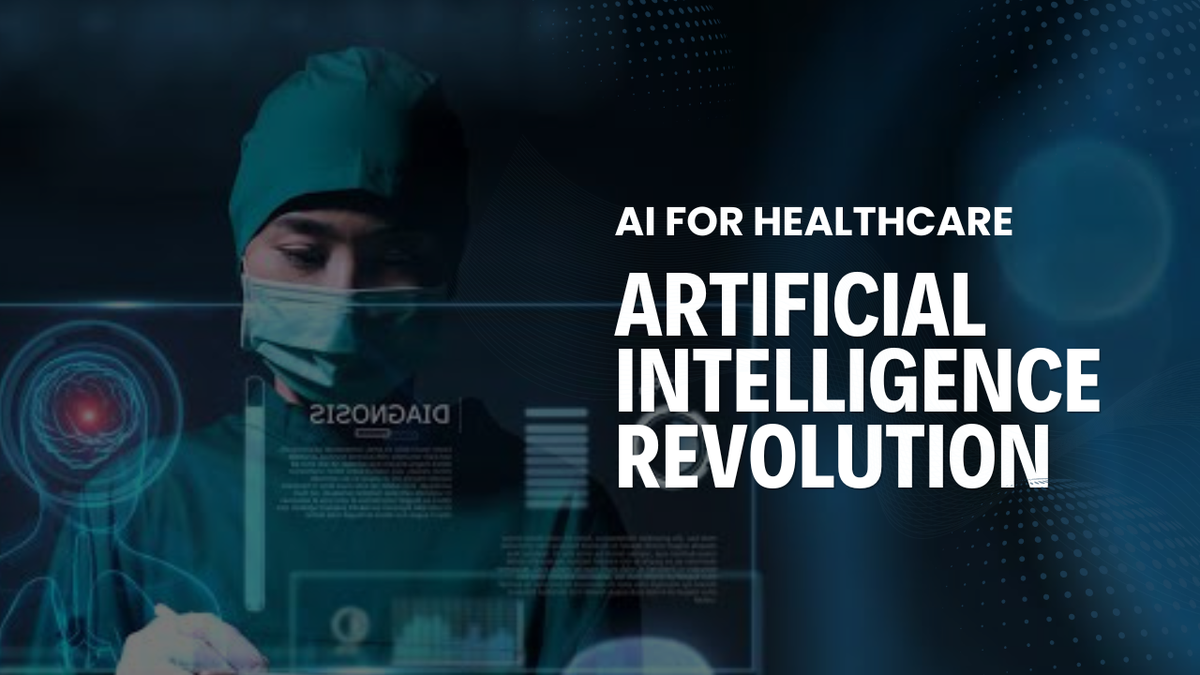
Healthcare professionals generate enormous amounts of medical data every day. Electronic health records, laboratory reports, medical imaging, wearable devices, and genomic data create opportunities that traditional systems struggle to analyze efficiently. AI bridges this gap by processing vast datasets, identifying hidden patterns, and providing actionable insights within seconds.
Today, AI supports physicians rather than replacing them. It helps radiologists detect abnormalities, assists surgeons during complex procedures, predicts disease outbreaks, automates repetitive administrative tasks, and personalizes treatment plans based on patient-specific information.
As healthcare systems continue facing rising patient demands, staffing shortages, and increasing operational costs, AI-driven healthcare solutions offer a practical path toward delivering better care while improving efficiency. This article explores how artificial intelligence is transforming healthcare, its major applications, benefits, challenges, real-world examples, and what the future holds.
Key Takeaways
- AI for Healthcare is revolutionizing diagnosis, treatment planning, medical imaging, and patient care.
- Artificial intelligence helps healthcare providers improve accuracy while reducing costs and administrative workload.
- AI-powered tools enable early disease detection, personalized medicine, and predictive analytics.
- Healthcare organizations are increasingly adopting AI technologies to improve patient outcomes and operational efficiency.
- Ethical AI implementation requires data privacy, transparency, regulatory compliance, and human oversight.
What Is AI for Healthcare?
Artificial Intelligence (AI) in healthcare refers to the use of computer systems capable of performing tasks that normally require human intelligence. These systems learn from medical data, recognize patterns, make predictions, and assist healthcare professionals in making informed decisions.
Unlike traditional software that follows fixed rules, AI continuously improves its performance through machine learning algorithms and data analysis.
Common AI technologies used in healthcare include:
- Machine Learning (ML)
- Deep Learning
- Natural Language Processing (NLP)
- Computer Vision
- Predictive Analytics
- Generative AI
- Robotics Process Automation (RPA)
Together, these technologies create intelligent healthcare systems that enhance both clinical and administrative operations.
Why AI Is Becoming Essential in Healthcare
Modern healthcare faces numerous challenges, including:
- Increasing patient populations
- Shortage of healthcare professionals
- Rising treatment costs
- Growing volumes of medical data
- Complex disease management
- Administrative inefficiencies
Artificial intelligence addresses these challenges by automating routine tasks, supporting clinical decision-making, and improving diagnostic accuracy.
Healthcare providers now rely on AI to:
- Analyze millions of medical records quickly
- Detect diseases at earlier stages
- Improve patient monitoring
- Reduce diagnostic errors
- Optimize hospital workflows
- Predict patient risks before complications occur
Rather than replacing doctors, AI acts as an intelligent assistant that helps clinicians make faster and more accurate decisions.
Major Applications of AI for Healthcare
AI-Powered Medical Diagnosis
One of the most significant applications of AI is assisting physicians in diagnosing diseases accurately.
Machine learning models analyze patient symptoms, laboratory results, genetic information, and imaging scans to identify potential medical conditions.
AI supports diagnosis in areas such as:
- Cancer detection
- Heart disease
- Diabetes
- Stroke prediction
- Skin diseases
- Eye disorders
- Kidney diseases
For example, AI algorithms can identify tiny abnormalities in CT scans or MRIs that may be difficult for the human eye to detect, helping clinicians diagnose diseases earlier.
Medical Imaging and Radiology
Radiology has become one of the fastest-growing areas for AI adoption.
AI systems can interpret:
- X-rays
- MRI scans
- CT scans
- Mammograms
- Ultrasounds
These tools assist radiologists by highlighting suspicious areas, reducing interpretation time, and minimizing human error.
Benefits include:
- Faster diagnosis
- Higher accuracy
- Reduced workload
- Early disease detection
- Improved patient outcomes
Hospitals worldwide increasingly integrate AI into imaging workflows to enhance efficiency while maintaining high diagnostic standards.
Predictive Analytics for Better Patient Care
Predictive analytics uses historical and real-time patient data to forecast future health events.
Healthcare organizations use AI to predict:
- Risk of heart attacks
- Hospital readmissions
- Sepsis
- Disease progression
- ICU admissions
- Emergency room demand
This allows healthcare providers to intervene before a patient's condition worsens, improving survival rates while reducing treatment costs.
Personalized Medicine
Every patient is different, and AI enables personalized treatment plans based on individual characteristics.
AI analyzes:
- Medical history
- Lifestyle factors
- Genetic information
- Medication response
- Environmental influences
This enables physicians to recommend therapies specifically tailored to each patient instead of relying solely on generalized treatment protocols.
Personalized medicine is particularly valuable in oncology, where AI helps identify targeted cancer therapies based on genetic mutations.
AI in Drug Discovery and Medical Research
Traditional drug development can take over a decade and cost billions of dollars.
Artificial intelligence accelerates this process by:
- Identifying promising drug candidates
- Predicting molecular interactions
- Simulating clinical outcomes
- Finding existing drugs for new diseases
- Reducing research costs
AI played an important role during the COVID-19 pandemic by helping researchers analyze massive datasets and accelerate vaccine and treatment research.
Pharmaceutical companies continue investing heavily in AI-powered research platforms to shorten development timelines and improve success rates.
Virtual Health Assistants and AI Chatbots
AI-powered virtual assistants improve patient engagement by providing instant access to healthcare information.
These assistants can:
- Answer common medical questions
- Schedule appointments
- Send medication reminders
- Track symptoms
- Provide wellness recommendations
- Support chronic disease management
Patients benefit from 24/7 assistance while healthcare providers reduce administrative workload.
Although AI chatbots cannot replace licensed medical professionals, they improve accessibility and streamline communication between patients and healthcare organizations.
AI in Remote Patient Monitoring
Wearable devices and connected health technologies generate continuous streams of patient data.
AI analyzes information collected from:
- Smartwatches
- Heart monitors
- Blood pressure devices
- Glucose monitors
- Fitness trackers
Healthcare providers receive alerts when abnormal patterns appear, allowing earlier intervention before emergencies occur.
Remote patient monitoring is especially beneficial for:
- Diabetes management
- Heart disease
- Hypertension
- Elderly care
- Post-surgical recovery
This approach reduces unnecessary hospital visits while improving long-term patient outcomes.
How AI Improves Hospital Operations
Beyond clinical care, AI significantly enhances hospital administration.
Healthcare facilities use AI for:
- Patient scheduling
- Staff allocation
- Inventory management
- Medical billing
- Insurance verification
- Electronic health record management
- Operating room optimization
Administrative automation saves valuable time, allowing healthcare professionals to focus more on patient care rather than paperwork.
Studies suggest hospitals can reduce operational costs while improving patient satisfaction through intelligent workflow automation.
Benefits of AI for Healthcare
Healthcare organizations adopting AI experience numerous advantages.
Improved Diagnostic Accuracy
AI assists physicians in identifying diseases more accurately through advanced pattern recognition and data analysis.
Faster Clinical Decisions
Healthcare professionals receive AI-generated insights within seconds, enabling quicker diagnoses and treatment planning.
Better Patient Outcomes
Earlier detection and personalized treatment plans contribute to improved recovery rates and long-term health.
Reduced Healthcare Costs
Automation minimizes unnecessary testing, streamlines operations, and reduces administrative expenses.
Increased Efficiency
Healthcare staff spend less time on repetitive tasks and more time delivering quality patient care.
Enhanced Preventive Care
Predictive analytics helps identify high-risk patients before complications develop, allowing preventive interventions.
AI in Surgery and Robotic-Assisted Procedures
Artificial intelligence is redefining modern surgery by improving precision, minimizing risks, and supporting surgeons before, during, and after operations. While AI does not replace surgeons, it enhances their decision-making through real-time data analysis and intelligent guidance.
AI-powered robotic systems assist with:
- Minimally invasive surgeries
- Orthopedic procedures
- Cardiac surgery
- Neurosurgery
- Urological operations
- Gynecological procedures
Benefits of AI-Assisted Surgery
- Smaller incisions
- Reduced blood loss
- Greater surgical precision
- Faster recovery times
- Lower risk of complications
- Shorter hospital stays
AI also analyzes preoperative imaging to help surgeons plan procedures more accurately, improving outcomes for complex surgeries.
AI for Mental Health Care
Mental health services are increasingly adopting AI to improve accessibility and early intervention.
AI-powered platforms can analyze speech patterns, text, facial expressions, and behavioral data to identify signs of anxiety, depression, or emotional distress. Virtual mental health assistants provide continuous support, mood tracking, and guided therapy exercises.
Common applications include:
- Depression screening
- Anxiety monitoring
- Cognitive behavioral therapy (CBT) support
- Suicide risk assessment
- Stress management
- Patient engagement
Although AI can support mental health care, licensed healthcare professionals remain essential for diagnosis and treatment.
AI in Electronic Health Records (EHR)
Electronic Health Records contain vast amounts of patient information that can be difficult to manage manually. AI streamlines this process by organizing and analyzing medical records efficiently.
AI-powered EHR systems help healthcare providers:
- Summarize patient histories
- Identify missing clinical information
- Detect medication interactions
- Generate clinical documentation
- Recommend treatment options
- Reduce documentation time
Natural Language Processing (NLP) allows AI to extract meaningful insights from physicians' notes, improving decision-making and reducing administrative burdens.
Real-World Examples of AI in Healthcare
Google DeepMind
Google DeepMind has developed AI systems capable of detecting eye diseases and assisting clinicians in diagnosing kidney injuries earlier than conventional methods.
Mayo Clinic
Mayo Clinic uses artificial intelligence to improve diagnostic imaging, predict patient outcomes, and support personalized treatment planning.
Microsoft Cloud for Healthcare
Microsoft integrates AI into healthcare platforms to improve clinical workflows, automate administrative tasks, and enhance patient engagement.
IBM Watson Health
IBM Watson Health has been used to analyze medical literature and support clinicians by providing evidence-based treatment recommendations, particularly in oncology.
Johns Hopkins Medicine
Researchers at Johns Hopkins have explored AI models that help identify patients at risk of sepsis, enabling earlier interventions and improving survival rates.
These examples demonstrate that AI is already delivering measurable value across healthcare systems worldwide.
Challenges of Implementing AI in Healthcare
Despite its advantages, AI adoption presents several challenges that healthcare organizations must address.
Data Privacy and Security
Healthcare data is highly sensitive. AI systems must comply with privacy regulations and use strong cybersecurity measures to protect patient information.
Bias in AI Algorithms
AI models are only as good as the data used to train them. Poor-quality or biased datasets can lead to inaccurate predictions and unequal healthcare outcomes.
Regulatory Compliance
Healthcare organizations must ensure AI systems comply with national and international healthcare regulations before deployment.
Integration with Existing Systems
Many hospitals use legacy systems that may not integrate easily with modern AI technologies.
Trust and Transparency
Healthcare professionals need to understand how AI reaches its recommendations. Explainable AI helps build confidence and supports informed clinical decisions.
Ethical Considerations of AI in Healthcare
Responsible AI implementation requires balancing innovation with patient safety.
Healthcare organizations should focus on:
- Protecting patient privacy
- Obtaining informed consent
- Maintaining transparency
- Reducing algorithmic bias
- Ensuring human oversight
- Regularly auditing AI systems
Ethical AI should support not replace clinical expertise, ensuring patients continue to receive compassionate, human-centered care.
The Future of AI for Healthcare
The future of AI in healthcare is promising, with innovations expected to reshape nearly every aspect of medicine.
Emerging trends include:
- AI-powered precision medicine
- Digital twins for personalized treatment
- Predictive population health management
- Generative AI for clinical documentation
- AI-assisted medical education
- Smart hospitals with automated workflows
- Advanced robotic surgery
- Wearable AI devices for continuous health monitoring
As AI technologies become more sophisticated, healthcare providers will be able to deliver more proactive, personalized, and efficient care.
AI vs. Traditional Healthcare
Feature
Traditional Healthcare
AI-Driven Healthcare
Diagnosis
Manual analysis
Data-driven decision support
Imaging
Human interpretation
AI-assisted image analysis
Treatment
Standard protocols
Personalized recommendations
Administrative Tasks
Manual processes
Automated workflows
Patient Monitoring
Periodic visits
Continuous remote monitoring
Disease Prediction
Limited forecasting
Predictive analytics
Efficiency
Time-intensive
Faster and scalable
Best Practices for Successful AI Adoption
Healthcare organizations should follow these best practices:
- Invest in high-quality healthcare data.
- Ensure compliance with privacy regulations.
- Train healthcare professionals on AI tools.
- Maintain human oversight in clinical decisions.
- Continuously monitor AI performance.
- Use explainable AI models whenever possible.
- Conduct regular security and compliance audits.
These practices help maximize the benefits of AI while minimizing risks.
Conclusion
Artificial intelligence is transforming healthcare by making medical services smarter, faster, and more efficient. From improving diagnostic accuracy and accelerating drug discovery to enabling personalized medicine and automating administrative workflows, AI for Healthcare is reshaping how providers deliver care and how patients experience treatment.
While challenges such as data privacy, ethical considerations, and regulatory compliance remain, the benefits of responsible AI adoption far outweigh the obstacles. As technology continues to evolve, AI will become an even more valuable partner for healthcare professionals, helping them provide higher-quality, patient-centered care.
Organizations that embrace AI today will be better positioned to improve clinical outcomes, reduce operational costs, and meet the growing demands of modern healthcare systems.